By Emily Henry, Owner of The Local Table
In Ketchikan, stories don’t start with businesses. They start with families.
Mine began five generations ago, when my great-great-grandfather arrived by fishing boat from Washington State. Since then, fishing hasn’t just been an industry; it’s been a way of life. Fishing is what brought my family here, and what’s kept us here.
I grew up in a tight-knit island community where everyone knows each other. Summers meant running through the woods near my grandparents’ cabin, learning to fish from my grandmother, and growing up alongside the same group of kids year after year. It was a childhood rooted in place—shaped by nature, family, and a strong sense of belonging.
But like many Alaska communities, Ketchikan has changed.
Adapting to a Changing Economy
I came of age during the tail end of the pulp mill era, when timber jobs were strong, schools were full, and young families were everywhere. When the mill shut down, it left a real impact—you could feel the shift.
Fishing remained strong, but like any industry, it has its ups and downs. In recent years, global competition and falling prices have made it harder for some fishermen to stay afloat.
That’s when I started thinking differently. Not just about adapting, but about how to connect people more directly to what we value here.
Turning Local Knowledge into a Local Experience
A registered dietitian by training, I’ve always loved cooking and teaching. After a downturn in the salmon market, I kept coming back to the same question: how do we help people better understand the value of wild Alaska seafood?
I wanted people to know how to tell the difference between wild Alaska salmon and imported fish. How to cook it. Why it matters—not just for taste, but for the health and sustainability of our fisheries.
The idea sat with me for a while until a friend finally told me, just do it.
So I did.
Two and a half years ago, we launched The Local Table, a hands-on cooking experience designed to connect visitors directly to Alaska’s fishing culture.
Where Cruise Tourism Meets Community
Today, cruise visitors are a big part of what makes this possible.
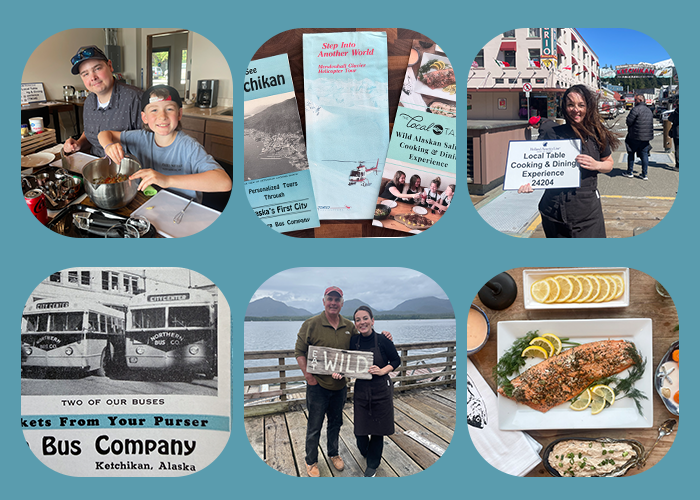
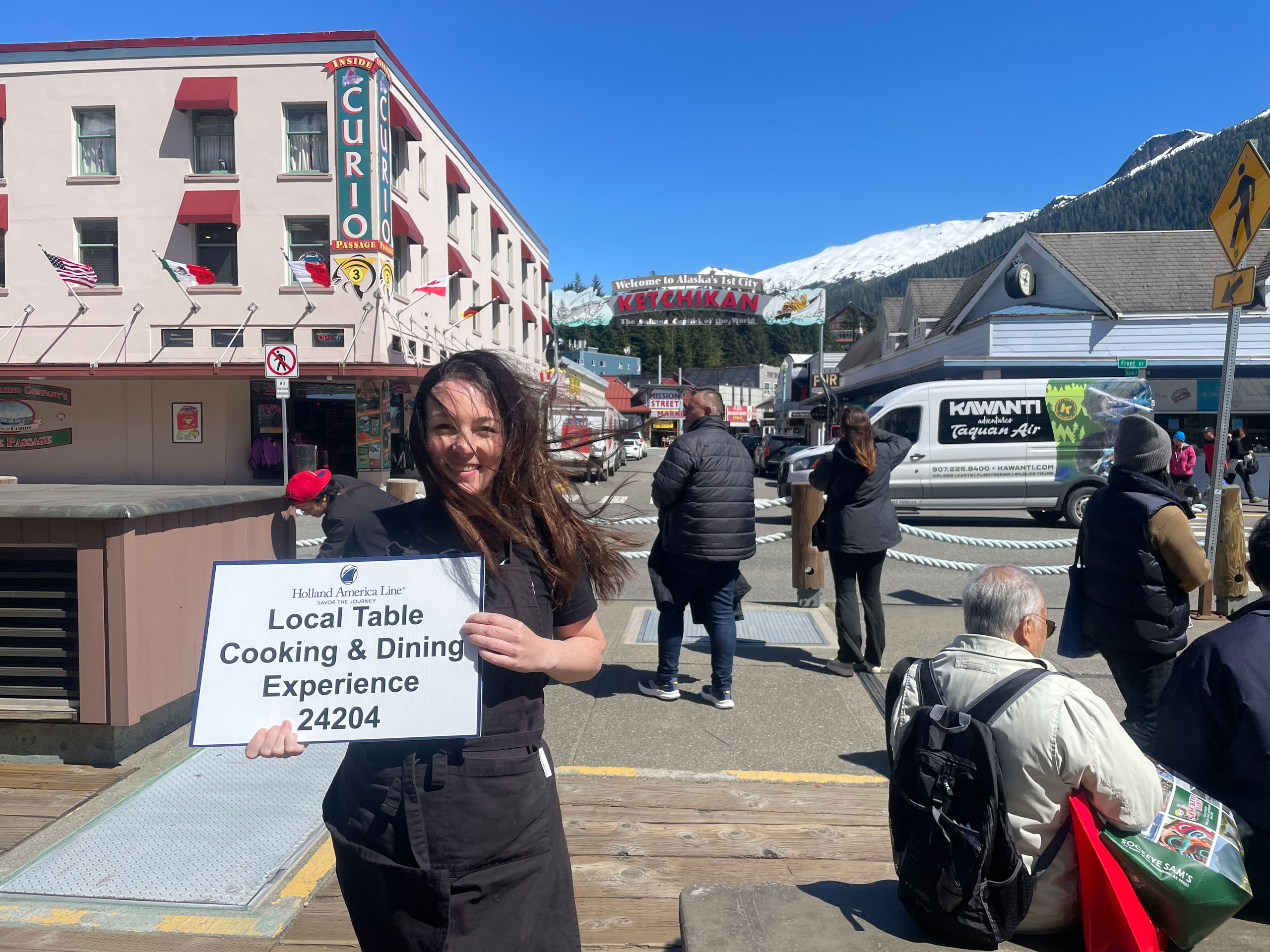
We meet guests right at the dock and walk them through a working harbor to our historic waterfront space. Inside, we welcome them with hot coffee (because it’s usually raining), smoked salmon dip, and a bit of my story.
I share my own experience as a deckhand on my dad’s boat, what it takes to bring high-quality fish from ocean to table, and why protecting our fisheries matters. Then we get to work.
Guests cook two dishes, make sauces, and learn how to handle fresh fish properly. At the end, we sit down together for a family-style meal featuring the freshest fish possible—often featuring fish caught by my own husband or father.
It’s not just about the food. It’s about the connection.
And the feedback has been incredible. Many guests tell us it’s the best meal they’ve had their entire trip.
Even the skeptics. We get people who come in saying they don’t like salmon, and by the end, they’ve completely changed their minds.
A Bridge Between Two Economies
For me, cruise tourism isn’t separate from our community—it’s part of how it survives. It’s about creating a bridge.
Tourism has helped fill the gaps left behind by changes in logging and fishing. It brings jobs, revenue, and creates opportunities for small businesses like mine. It creates an opportunity to share what matters most to our community with people who may never have experienced it otherwise. Through food, we’re able to tell a deeper story about Alaska—about sustainability, about livelihoods, and about the people behind the product.
It’s also not new to us. My great-grandfather went on to start a sightseeing business and later founded Temsco Helicopters. So in a lot of ways, this feels full circle.
In my experience, tourism works best when it complements other industries—not competes with them. Fishing, aviation, and tourism can all exist side by side, each strengthening the other.
Investing in the Next Generation
I’m now raising my own children in Ketchikan, hoping to give them the same sense of place I grew up with.
My oldest son has already taken part in classes—and is eager to help.
Whether my kids choose fishing, business, or something else entirely, I want them to have the option to stay here if they want to. And increasingly, that depends on having a diversified economy—one where industries support each other.
More Than a Souvenir
At the end of each class, guests leave with more than a meal.
They leave with recipes, with knowledge, and with a deeper understanding of where their food comes from—and who it supports.
My hope is that they take that with them. That they choose wild Alaska fish. That they share what they’ve learned. That they remember this place.
In that way, The Local Table isn’t just a business.
It’s a bridge—between visitors and locals, between past and future, and between the waters that sustain Alaska and the people working to carry that way of life forward.